
The Lunch Lady Cookbook ~ Chicken a la Fausto

Hey there Boys and Girls! This is The Lunch Laddy, comin’ at ya, straight outta cyberspace, with another, long overdue installment of The Lunch Lady Cookbook.
I’ve been away for a while, but now I’m back and I’m bad; and bringing you a mouth watering recipe for a dish that has become a go-to in the Lunch Laddy’s cucina. It is my gustatory pleasure to present to you “Chicken a la Fausto!”
Even if you are vegetarian, or vegan, or gluten free, there are still plenty of delectable delights in this dish for you. Just avert your eyes during the chicken part. Why “a la Fausto?” you may ask? Well, my friends, THAT is an excellent question. It is named after an unforgettable character we knew who called himself by that name. He passed through our lives like a tornado a few years back. He was a drifter, a grifter, a classic flim flam man. He pretended to be many things. He claimed to be an Italian prince, a doctor, a professional photographer, an opera singer, a bicycle racer, a wine distributor and a luthier, among other things. He had a magnetic kind of charm, and very expensive tastes, but never seemed to have his credit card with him or any cash on him. There were also just too many inconsistencies in his convoluted stories and it soon became apparent he’d steal the shoes right off your feet if you’d let him. He was eventually banished from the kingdom and was last reported to be posing as a diamond merchant in Lower Manhattan. Good luck with that. However, he did leave behind a bit of a legacy by way of of a couple of really good, rustic recipes. One was a recipe for baked chicken and vegetables, which I named Chicken a la Fausto.
Here is the variation I made today for The Lunch Lady Cookbook.
Chicken a la Fausto
Place 4 chicken quarters in a baking dish. Season with Worcester Sauce, basil, garlic powder, salt, pepper, barbecue sauce. Tuck in brussels sprouts, yellow summer squash and top with sliced red onion. Oh yeah. Don’t forget. Pour a healthy dollop of dry red wine into the mix. It’s a colorful dish. You got yer basic flesh tones, complemented handsomely by red, yellow, and green, all in one dish. Pop into a preheated 350 degree oven for 1 hour and voila ~ Chicken a la Fausto! Serve with salt potatoes on the side. Let rest and cover with aluminum foil (tin foil) which you can use to make a tin foil hat to wear while you watch Ancient Aliens after dinner.


Music pairing: Lazy, laconic, lilting tunes by The Be Good Tanyas, Gillian Welch and Eilen Jewel seemed to fit the mood of this early summer afternoon.
Beverage pairing: I recommend a sassy and splashy little Spanish red called Laya. Vintage 2014. A brash blend of garnacha tintorera and monastrelli grapes that yields a fruit bomb that explodes on your tongue like the 14.5% alcohol bad boy that it is. I have photographed it on my kitchen floor because I figure if you’re gonna end up on the floor, you may as well just start on the floor and stay there.

To Do List
Before enlightenment
Haul water Chop wood
After enlightenment
Haul water Chop wood
In between
Haul ass

MGM
Summer Solstice 2016
Spent by Antonia Crane
Published 2014, Rare Bird Books, A Barnacle Book
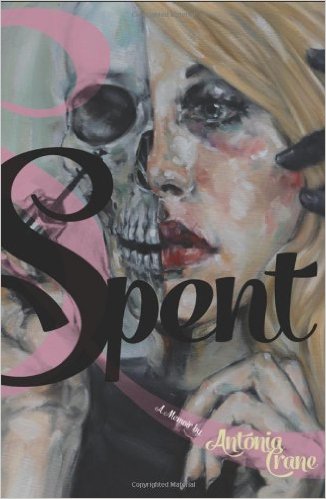
I just finished reading Antonia Crane’s gripping memoir Spent, and I realize it happened again. I fell hard for a book. After inevitably coming to the end, I am, once again, left wondering “Now what in the Hell am I supposed to do?” I end up doing the only thing I can do in a case like this. I talk about it. I used to write book reviews, but it’s something I really don’t do much anymore. However, there are times when a book really lights a fire and truly captures my interest, and the best way for me to process what I’ve just read is to talk about it, and sometimes rant and rave about it. That’s what’s happening here. To be clear, I am not even attempting to write a piece of serious literary criticism. This is just me responding, reacting, processing. This is me just sayin’: “You gotta read this book!”
Spent gathers early momentum with a depiction of Antonia Crane’s childhood in coastal northern California, the disintegration of her family life and her coming of age in a small town that just doesn’t offer enough to keep her there. She moves to San Francisco and later to LA, where she supports herself by stripping. She lives a bohemian, alternative lifestyle, hits bottom doing hard drugs, but finds connections that lead her to sobriety. She becomes a powerful political activist within the sex worker industry, earns an undergraduate degree and enrolls in graduate school. Crane’s reconnection with her mother is heart breaking as it occurs just as her mother is diagnosed with terminal cancer. At a new low, with no other resources, Crane returns to sex work which leads to an arrest. This serves as a clarion call to change her life. At the risk of sounding trite, the old adage “What doesn’t kill you makes you stronger” seems to apply here. While the sex industry is the setting for Antonia Crane’s journey, on a deeper level, it is a memoir about the human condition, the search for meaning and finding one’s purpose, and the importance of connection through family and community.
Every so often I’m lucky enough to come across a book that is so well written, so personal, so honest and unflinching and so compelling that I never want it to end. I just want to go on and on, living with those characters in that world. I wish I could say that about all the books I read, but I can’t. It’s not to say that they are not good books or well written, but, for whatever reason, they just don’t command my attention and engagement the way this one does. Spent is a special book, a searing memoir that got under my skin in a serious way and left me hungry and longing for more.
Antonia Crane is an articulate and vibrant story teller and a force of nature as a performance artist. I’ve had the good fortune to actually see and hear her read selections from this book on two separate occasions, once in Boston and again in Seattle, shortly after publication. I was a participant in the reading in Boston. It was my first public reading and I was nervous. There was a timer on the podium to help us keep our readings to the allotted four minute limit. Ironically, it looked like a dildo and started blinking red to signal 30 seconds to wrap things up. I was on the schedule immediately following somebody I’d never heard of named Antonia Crane. The author hosting the reading called her name and I watched as she emerged from behind a pillar across the room. She was tall, blonde, athletic looking, dressed in black leather, with muscular tattooed arms. She approached the podium looking like some kind of Viking warrior goddess and delivered a reading about rough gay bondage sex fueled by crystal meth. She had the audience enthralled. The timer started blinking at the 30 second mark and Crane quickened her pace, picked up the timer and held it aloft as if she were the Statue of Liberty, dramatically finishing her piece just as the timer went off. She tore it up and brought down the house. It was unquestionably the best reading of the event. And there I was, holding a crumpled piece of paper with my staid, little poem, dressed in my tweed jacket with patches on the elbows and I had to follow that. It was like the teeny bopper pop group, The Monkees following a mercurial guitar player named Jimi Hendrix. I’ll never forget it.
Everyone has some kind of story to tell. But not every story is worthy of a written memoir. Memoir writing takes a very unique and special kind of skill. It requires an almost mystical legerdemain to put the reader inside the author’s head and Antonia Crane totally pulls it off. Spent is a memoir right up there with the very best. It goes toe to toe with some of my favorites such as Kate Braverman’s Lithium For Medea and Frantic Transmissions To And From Los Angeles , Ghost Bread by Sonja Livingston, Wild by Cheryl Strayed, Just Kids and M Train by Patti Smith, Things I Like About America and 501 Minutes To Christ by Poe Ballantine and Chronicles by Bob Dylan. These are the Titans of Modern Memoir in my world and Antonia Crane is right up there on Mount Olympus with the rest of them and the best of them.
Antonia Crane is an author, writer and teacher. She has worked as an adult dancer and performer. Her writing has been published in The Rumpus, Black Clock, ZYZZYVA, Slake, Smith Magazine, and The Los Angeles Review. She received her MFA in creative writing at Antioch University. She lives in Los Angeles and teaches in the UCLA Extension Writers Program.
Find links to her publications at http://www.antoniacrane.com
Also listen to a wonderfully entertaining and informative interview with Brad Listi at

Book Review: Beyond Redemption by Gary V. Powell
2015 Fiction 121 pages
I tend to like flash fiction and short stories in general, but I am absolutely knocked out by the flash fiction and short stories in Gary V. Powell’s gem of a collection Beyond Redemption. I wonder if Gary Powell’s training in the law helped him to develop a disciplined approach to writing in such a powerfully concise style that gets straight to the point. He knows exactly how and where to pack the power in his punches. His prose is lean, compact and taut, yet lyrical and poetic enough to be powerfully evocative and compelling. It takes great skill to compress all of the necessary story elements into this kind of short form and Gary Powell does it with aplomb.
Beyond Redemption consists of 20 pieces, 18 of which have previously appeared in various literary journals, and every one of them is a winner. If this were an old school record album, then this could easily be a collection of his greatest hits.
Beyond Redemption explores the struggles of adolescents to assert themselves, young people coming of age, middle aged couples coming to grips with broken dreams and broken relationships, laid off factory workers, patients in a psych ward, people struggling to reconcile dreams of the past with the reality of the present, and people bumped, bruised and dinged up by life, but who find a way to dig deep and muster the resolve to keep on keepin’ on. Conflict lies at the heart of each piece and creates the tension that drives it. However, these are not depressing stories. Each one of them is, in some way, about resiliency of the human spirit.
Powell demonstrates an impressive ability to drop the reader into a specific time and place while wearing the character’s point of view like a second skin. He is not constrained by age or gender. Powell writes just as convincingly from the point of view of an angst ridden teenage girl looking for acceptance as he does from that of a disaffected middle aged man plodding through an unrewarding corporate career.
Many of the stories are colored by a very recognizable regional mid western flavor with references to Indiana, Wisconsin, Iowa, Michigan and the Great Lakes. However, Powell writes just as convincingly about the deep south and the bayou country of Louisiana. Gary Powell is a great story teller who is, in my opinion, in the same league as widely recognized contemporary masters of the form including Tobias Wolff, Amy Hempel and Ann Beattie. Beyond Redemption is a collection well worth reading and my only regret is that I came to the end of it.
About the author:

Gary V. Powell’s stories and flash fiction have been widely-published in both print and online literary magazines including most recently at The Thomas Wolfe Review, Fiction Southeast, SmokeLong Quarterly, and Best New Writing 2015. In addition to being the winner of the 2014 Gover Prize for short-short fiction, several of his stories have placed in other national contests including The Press 53 Prize (2012), Glimmer Train (2013) and The Thomas Wolfe Fiction Prize (2014).
His first novel, Lucky Bastard, was recently published by Main Street Rag Press.
For this, and more of his work visit http://www.authorgaryvpowell.com
Chief Great Heart’s Last Dance

I’m sitting here, still in my jammies, at 3 o’clock in the afternoon waiting for the world to end. It must be something like the sense of anticipation, or apprehension, that spawned that anachronistic old saying: “Waiting for the other shoe to drop.” It’s early spring and I should be seeing flowers bloom and buds burst forth as I harken to the delightful song of peepers in the pond. Instead I look out my window at piles of ice covered snow as the wind howls like the furies.
If climate change and all its unseasonable and unreasonable weather patterns, melting ice caps, rising sea levels, wildfires, tornadoes, floods and hurricanes aren’t enough to worry about, there are plenty of other boogeymen lurking under the bed to haunt my dreams in the wee, wee hours.
The American political landscape is a 3 ring circus, carnival freak show, Wrestlemania smack down, an episode of the Jerry Springer Show meets Family Feud. I knew this country wasn’t filled with happy campers from sea to shining sea, but I had no idea so many people were so pissed off about so many things, all at the same time. It’s kind of harshing my mellow. Why can’t we all just get along?
While the super wealthy and all powerful squirrel away their fortunes in shell corporations and off shore cookie jars, build bunkers designed to withstand the impact of Planet X striking the Earth, and attend secret meetings to plot the demise of the rest of us Godforsaken misfits, it makes me wonder how far the spare change in my sock drawer and that extra can of Spagettios in the pantry will take me when it all hits the fan. At least I have jumper cables in my car.
Never mind that a deer tick smaller than a poppy seed lurking in my grass is capable of inflicting unspeakable mayhem upon the human body that can lead to an unholy host of neurological disorders. It almost makes me glad the lawn is still covered with snow in April.
I shouldn’t whine. I am grateful for all that I have. I have more of most anything that I really need. I have food, clothing, shelter, and access to medical care in a place where everything isn’t blowing up or blowing away. Really. What more could I ask for? Well maybe a little more legroom in Economy on commercial flights and tequila that is actually good for me. But still, I can’t seem to shake this sense of existential dread.
Although maybe existential dread is, itself, a luxury? Who has time for existential dread when you’re trying to outrun a hungry lion, hide out from killer robots, or work two minimum wage jobs just trying to eke out an existence? What’s it all about Alfie?
What does one do to prepare for anything that might happen at any time? Some people find comfort in religion. Others watch American Idol. Is that even on anymore? It won’t do any good just to squat down in my back yard and cover my ass with my hat while I scan the skies for the apocalypse. Maybe six pack abs would help? It’s times like these that it’s good to remember: “When the going gets tough, the tough go shopping.”
Book Review:Tables Without Chairs
Literature by Bud Smith and Brian Alan Ellis
Illustrations by Waylon Thornton
Publisher: House of Vlad Productions
First edition (February 3, 2016)
166 pages

It’s a snow day for me. Snowed in. On April 5th. More snow than we had all winter. More winter than we’ve had all spring. And I’m snowed in. Well, kinda, sorta, or at least pretending to be. It gives me an excuse to spit in Monday’s eye. Just lay around like a fat, lazy slob and read weird, cool books like Tables Without Chairs, a collaborative literary/visual arts mash-up in a mosh pit featuring the verbal musings and pyrotechnics of Brian Alan Ellis and Bud Smith, with quirky illustrations by Waylon Thornton poured like hot sauce over the entire frittata.
The authors describe this lovable little hybrid beast as “totally punk rock DIY” and “basically a mix of prose/tweets/flash fiction/reviews of corner bodegas/instructions for self destruction, etc. etc.” I’d say that sums it up beautifully. It’s a book that defies conventional commentary with conventional language and methods because there is very little about it that is conventional. Throw Waylon Thornton’s twisted monster cartoons into the mix and you have a recipe for literary Jambalaya.
It reminds me of students I’ve had in my classes during my tenure as a public school art teacher (Yeah. I did that) cutting up, pulling pranks, breaking rules, not following directions, but making art that is totally original and better than anything I could do. Those were the kind of kids that kept me in stitches and who could not, should not be constrained and usually really blossomed when allowed to sit together at their own table, as long as I kept an eye on the Exacto knives and anything else that might start a fire or blow up the art room. Coincidentally, all three of these literary miscreants have been, or still are, rock musicians. In many ways, this collaboration is a little like guys wailing away in a garage band with amps cranked to 11, and end by smashing their shit as the jam comes to a screaming, smoking climax.
You can label it anything you like. Some might even call it “Bizarro” or “Lowbrow Art,” which I would personally take as a compliment. Their approach to this collaboration is unstudied and off the cuff, and for me, totally authentic. Whether one chooses to label it as “experimental” or even “avant-garde,” there is no question that it breaks from tradition. It most certainly is a reflection of at least some portion of the American cultural landscape and zeitgeist, and a generation, and it’s not unlike the “artist” R. Mutt flipping the bird at the Society of Independent Artists in 1917 when he submitted his sculpture entitled “Fountain” for exhibition. In actuality, “Fountain” was simply a porcelain urinal and the artist was Marcel Duchamp. It caused an outrage, was rejected by the committee and ruffled the feathers of the art establishment. Isn’t it ironic that Marcel Duchamp and his infamous urinal may be what history has remembered most about that exhibition?
While the book is not thematically linked as such, all three artists share a similar sensibility and styles that are characterized by a sense of the absurd, playfulness, and a wickedly ironic sense of humor. I think Brian Alan Ellis’s portion of the book could be described as more reflective and introspective. Not in an emo sort of way, but in more of a good natured, self deprecating humor kind of way. Much of it is comprised of one liners that could be delivered as stand up comedy. There is a segment devoted to facetious advice for writers that is no less than hilarious. Bud Smith’s writing might be called more narrative. Reading Bud Smith’s pieces is like watching the video feed from a GoPro camera he’s wearing on his head as he goes about his life in New York City and New Jersey. Waylon Thornton’s drawings are inhabited by fantastical characters that are like a combination of the twisted line drawings of Ralph Steadman and Maurice Sendak’s “Where The Wild Things Are.”
An interview with both authors conducted by Sam Slaughter via Facebook Messenger serves as a kind of stream-of-consciousness “Afterword” to the main text of the book. It’s a little like the freewheeling conversation that might take place in an episode of Jerry Seinfeld’s “Comedians in Cars Getting Coffee” or the improvised dialogue between the slacker/stoners in “Workaholics.”
Tables Without Chairs is raucous, rowdy and irreverent, but beneath its crunchy surface is a soft, chewy center full of sly wisdom and some pretty thought provoking deep shit. It’s a ride well worth taking.
About the Artists
Brian Alan Ellis is the author of A Series of Pained Facial Expressions Made While Shredding Air Guitar: Poems, Observations, Lists, Letters, Notes, Bullshit Aphorisms, and General Tales of Ordinary Crabbiness, three novellas, two short-story collections, and a book of humorous non-fiction. His writing has appeared at Juked, Hobart, Monkeybicycle, DOGZPLOT, Connotation Press, Diverse Voices Quarterly, Vol. 1 Brooklyn, Literary Orphans, Out of the Gutter, Heavy Feather Review, People Holding, The Next Best Book Blog, Revolution John, Lost in Thought, jmww, Hypertext, Electric Literature, and Atticus Review, among other places. He lives in Tallahassee, Florida.
Bud Smith is the author of the novels, F 250 (Piscataway House, 2015), Tollbooth (Piscataway House 2013), and the forthcoming I’m From Electric Peak (Artistically Declined, 2016), among others. Smith writes the column WORK SAFE OR DIE TRYING at Real Pants.
Waylon Thornton is an artist, musician and writer based in Florida. He is the illustrator of Brian Alan Ellis’s novella King Shit, and has been involved in musical projects including Strange lords, Waylon Thornton and the Heavy Hands, Damage Brain, Indian Teeth, Mean Moon and Cara Del Gato. He is currently writing a book with the working title Glue Baby.
Reviewer
Michael Gillan Maxwell is a garden gnome, drunken ukulele basher and visual artist in rural New York and author of The Part Time Shaman Handbook: An Introduction For Beginners.
Some things change before we notice, and others sneak by under our noses, but Time, a slow train runnin’ creeps up like quicksand.
Source: From North Beach


 Your Own Back Yard - Michael Gillan Maxwell